The Architecture
of Great Ote Hall
Principal Rooms & Interior Features
Upper Rooms

A House of Craftsmanship & Continuity
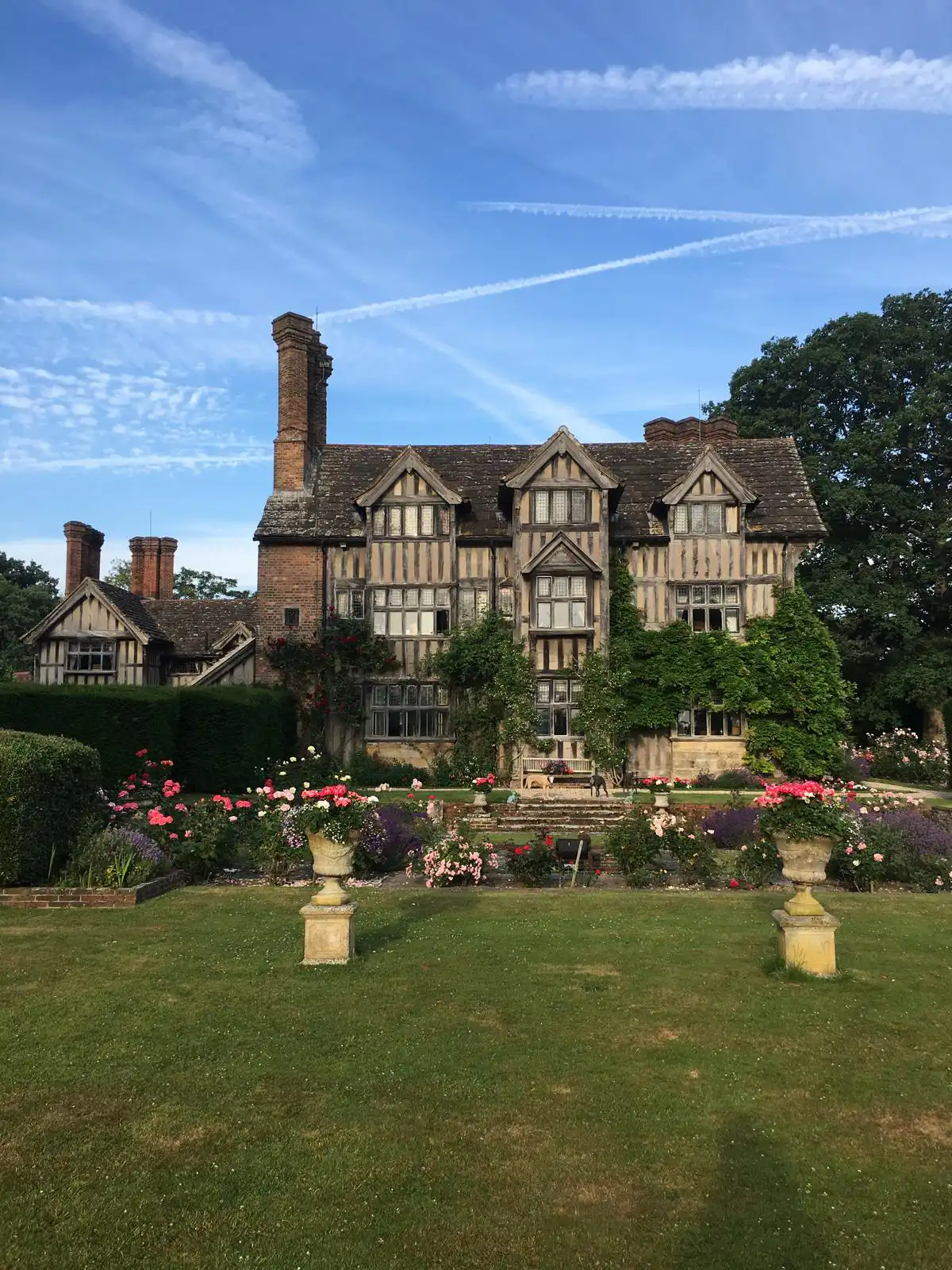
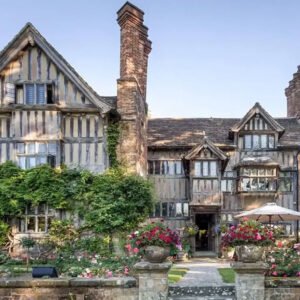
Set within extensive grounds, Great Ote Hall is a distinguished two-storey house with attics, embodying the character and craftsmanship of late Tudor and early Jacobean Sussex. Its walls are constructed in traditional half-timbering set upon sandstone plinths, with later brick infill, while the roofs are covered in locally distinctive Horsham stone slates. Five substantial brick chimney stacks rise prominently above the building, reinforcing its historic presence.
The house is arranged on a T-shaped plan, reflecting its phased development. The earlier section, forming the stem of the T, dates from around 1550, while the more formal east wing, completed in 1600, presents a symmetrical and refined façade characteristic of the period. A later south projection has been added in a sympathetic style.
The south front of the earlier range has undergone considerable restoration, including the addition of a modern entrance annexe. This incorporates a 16th-century doorway, alongside a number of carefully salvaged interior elements—such as overmantels and panelling—brought from destroyed historic buildings in Guildford and Godalming. The original entrance, however, lay further west, aligned with a corresponding doorway in the north wall.
At the heart of the house, the hall retains one of its most striking features: a substantial oak tree trunk rising uninterrupted to attic level, a powerful reminder of the building’s original timber frame construction.
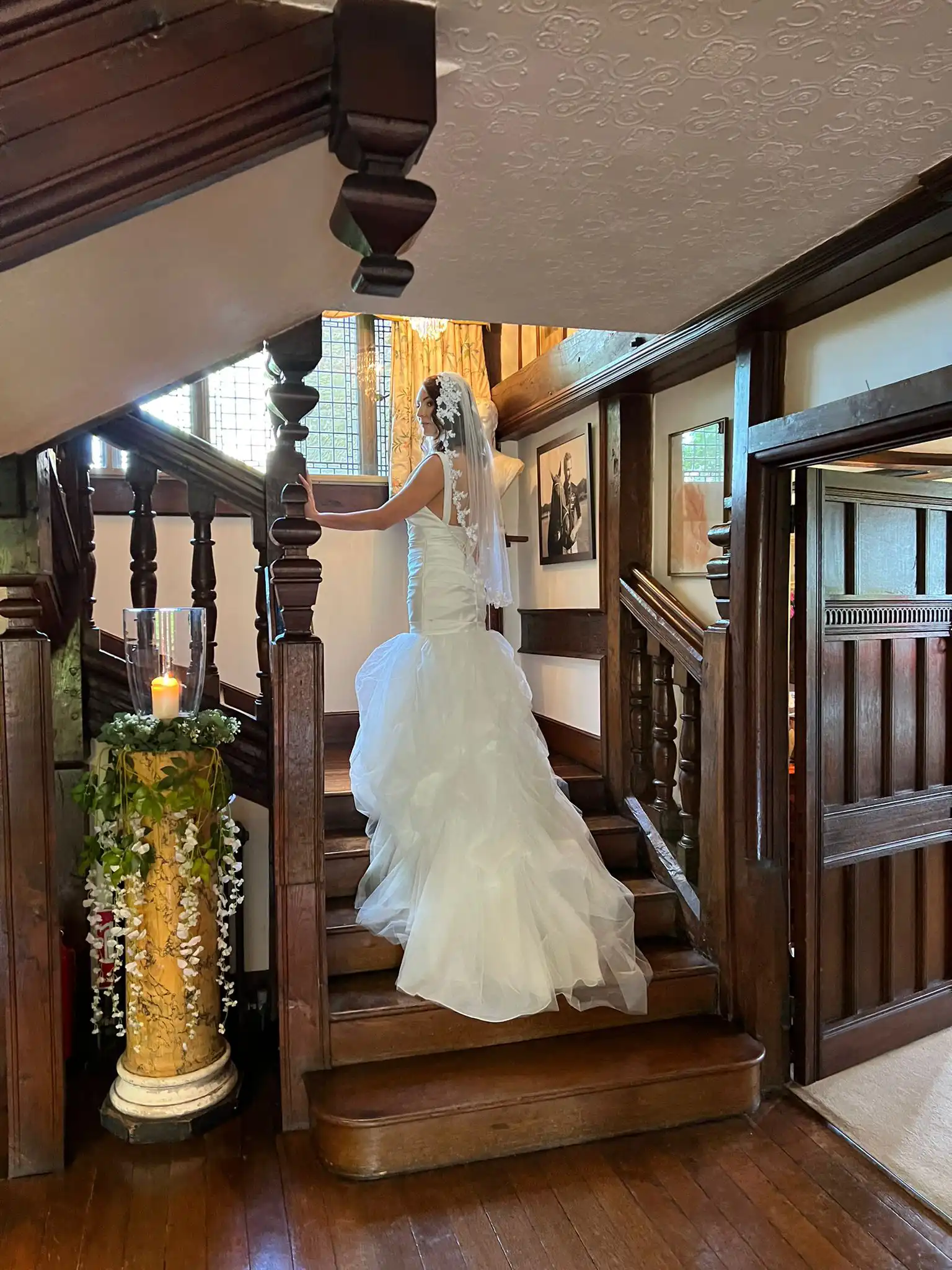
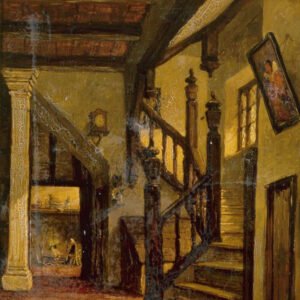
The staircase, now repositioned slightly west of its original location, is a fine example of circa 1600 craftsmanship. It features continuous newels, turned balusters, square finials with pendants, and a beautifully moulded handrail.
The house is arranged on a T-shaped plan, reflecting its phased development. The earlier section, forming the stem of the T, dates from around 1550, while the more formal east wing, completed in 1600, presents a symmetrical and refined façade characteristic of the period. A later south projection has been added in a sympathetic style.
The south front of the earlier range has undergone considerable restoration, including the addition of a modern entrance annexe. This incorporates a 16th-century doorway, alongside a number of carefully salvaged interior elements—such as overmantels and panelling—brought from destroyed historic buildings in Guildford and Godalming. The original entrance, however, lay further west, aligned with a corresponding doorway in the north wall.
At the heart of the house, the hall retains one of its most striking features: a substantial oak tree trunk rising uninterrupted to attic level, a powerful reminder of the building’s original timber frame construction.
The staircase, now repositioned slightly west of its original location, is a fine example of circa 1600 craftsmanship. It features continuous newels, turned balusters, square finials with pendants, and a beautifully moulded handrail.
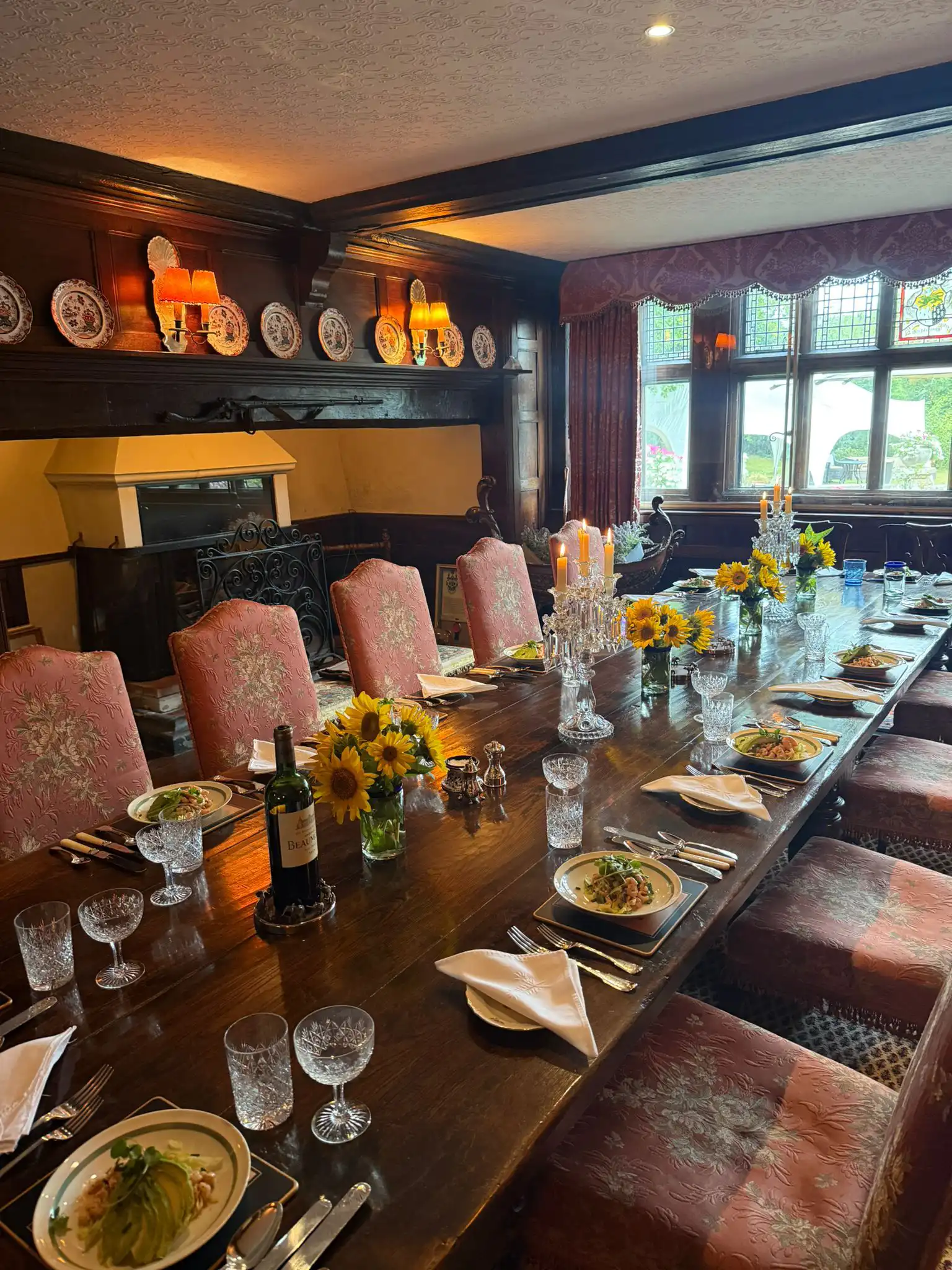
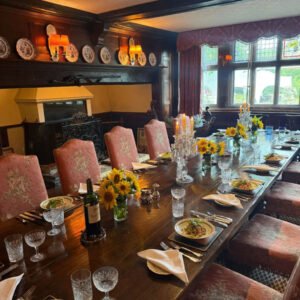
The present dining room formed the original kitchen of the house. It retains a wide fireplace with an oak lintel and bread oven set within the west wall, alongside original moulded ceiling beams.
The drawing room, historically known as the “Old Hall,” occupies the northern half of the east wing and incorporates the former entrance porch. Its stone fireplace, with a flat four-centred arch, is complemented by an elaborate imported overmantel featuring carved caryatid figures. Original timber elements survive here, including a beam with finely carved stop-chamfers.
The remainder of the east wing is taken up by the “Old Kitchen,” which contains a wide, lintelled fireplace flanked by built-in cupboards. Throughout both phases of the house, the floors are constructed from substantial elm baulks, adding to the building’s authenticity and sense of age.
The drawing room, historically known as the “Old Hall,” occupies the northern half of the east wing and incorporates the former entrance porch. Its stone fireplace, with a flat four-centred arch, is complemented by an elaborate imported overmantel featuring carved caryatid figures. Original timber elements survive here, including a beam with finely carved stop-chamfers.
The remainder of the east wing is taken up by the “Old Kitchen,” which contains a wide, lintelled fireplace flanked by built-in cupboards. Throughout both phases of the house, the floors are constructed from substantial elm baulks, adding to the building’s authenticity and sense of age.
Above the dining room lies the so-called “Queen Elizabeth’s Room,” distinguished by its oriel window. The fireplace, with its chamfered four-centred arch, reflects an earlier style, while later Jacobean panelling has been incorporated above. A particularly fine beam is carved with H-leaf and daisy motifs, showcasing the decorative craftsmanship of the period.
The Withdrawing Room, located above the drawing room, retains much of its original panelling and features a fireplace with characteristic Jacobean composite panels divided by fluted detailing.
Above the Old Kitchen is the State Bedroom, an especially notable chamber. Its fireplace is similar in form to that of the drawing room, while the overmantel displays three scalloped arches separated by fluted pilasters. It is inscribed “Anno G/TM 1609,” commemorating Thomas and Mary Godman, and providing a direct link to the family who shaped the house. An original door survives to the east of the room.
The Withdrawing Room, located above the drawing room, retains much of its original panelling and features a fireplace with characteristic Jacobean composite panels divided by fluted detailing.
Above the Old Kitchen is the State Bedroom, an especially notable chamber. Its fireplace is similar in form to that of the drawing room, while the overmantel displays three scalloped arches separated by fluted pilasters. It is inscribed “Anno G/TM 1609,” commemorating Thomas and Mary Godman, and providing a direct link to the family who shaped the house. An original door survives to the east of the room.
Throughout Great Ote Hall, the survival of original materials—oak beams, elm floors, carved stonework, and panelling—speaks to a building that has evolved over centuries while retaining its essential character. The combination of structural integrity, decorative detail, and historic adaptation makes it a rare and compelling example of a Sussex manor house.
The Architecture
of Great Ote Hall/01
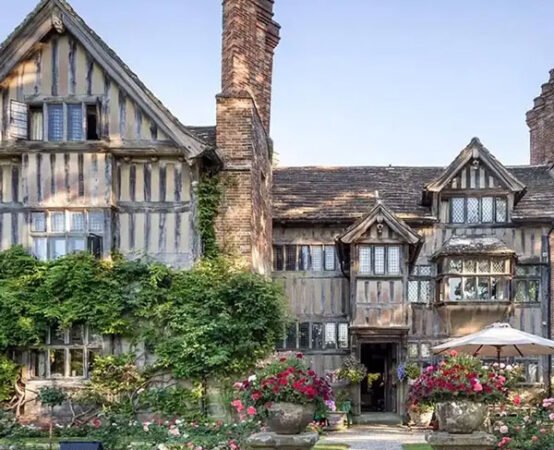
Set within extensive grounds, Great Ote Hall is a distinguished two-storey house with attics, embodying the character and craftsmanship of late Tudor and early Jacobean Sussex. Its walls are constructed in traditional half-timbering set upon sandstone plinths, with later brick infill, while the roofs are covered in locally distinctive Horsham stone slates. Five substantial brick chimney stacks rise prominently above the building, reinforcing its historic presence.
The house is arranged on a T-shaped plan, reflecting its phased development. The earlier section, forming the stem of the T, dates from around 1550, while the more formal east wing, completed in 1600, presents a symmetrical and refined façade characteristic of the period. A later south projection has been added in a sympathetic style.
The south front of the earlier range has undergone considerable restoration, including the addition of a modern entrance annexe. This incorporates a 16th-century doorway, alongside a number of carefully salvaged interior elements—such as overmantels and panelling—brought from destroyed historic buildings in Guildford and Godalming. The original entrance, however, lay further west, aligned with a corresponding doorway in the north wall.
At the heart of the house, the hall retains one of its most striking features: a substantial oak tree trunk rising uninterrupted to attic level, a powerful reminder of the building’s original timber frame construction.
The staircase, now repositioned slightly west of its original location, is a fine example of circa 1600 craftsmanship. It features continuous newels, turned balusters, square finials with pendants, and a beautifully moulded handrail.
The house is arranged on a T-shaped plan, reflecting its phased development. The earlier section, forming the stem of the T, dates from around 1550, while the more formal east wing, completed in 1600, presents a symmetrical and refined façade characteristic of the period. A later south projection has been added in a sympathetic style.
The south front of the earlier range has undergone considerable restoration, including the addition of a modern entrance annexe. This incorporates a 16th-century doorway, alongside a number of carefully salvaged interior elements—such as overmantels and panelling—brought from destroyed historic buildings in Guildford and Godalming. The original entrance, however, lay further west, aligned with a corresponding doorway in the north wall.
At the heart of the house, the hall retains one of its most striking features: a substantial oak tree trunk rising uninterrupted to attic level, a powerful reminder of the building’s original timber frame construction.
The staircase, now repositioned slightly west of its original location, is a fine example of circa 1600 craftsmanship. It features continuous newels, turned balusters, square finials with pendants, and a beautifully moulded handrail.
Principal Rooms & Interior Features/02
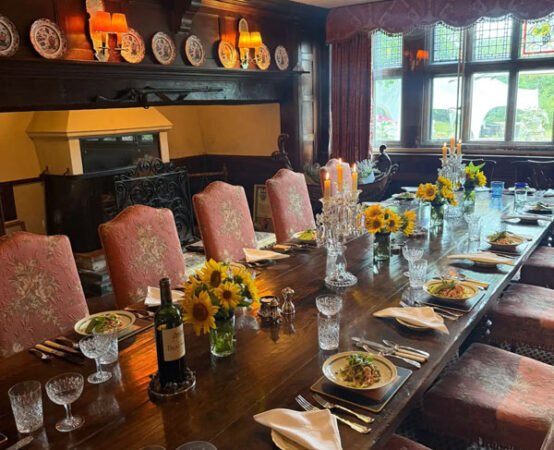
The present dining room formed the original kitchen of the house. It retains a wide fireplace with an oak lintel and bread oven set within the west wall, alongside original moulded ceiling beams.
The drawing room, historically known as the “Old Hall,” occupies the northern half of the east wing and incorporates the former entrance porch. Its stone fireplace, with a flat four-centred arch, is complemented by an elaborate imported overmantel featuring carved caryatid figures. Original timber elements survive here, including a beam with finely carved stop-chamfers.
The remainder of the east wing is taken up by the “Old Kitchen,” which contains a wide, lintelled fireplace flanked by built-in cupboards. Throughout both phases of the house, the floors are constructed from substantial elm baulks, adding to the building’s authenticity and sense of age.
The drawing room, historically known as the “Old Hall,” occupies the northern half of the east wing and incorporates the former entrance porch. Its stone fireplace, with a flat four-centred arch, is complemented by an elaborate imported overmantel featuring carved caryatid figures. Original timber elements survive here, including a beam with finely carved stop-chamfers.
The remainder of the east wing is taken up by the “Old Kitchen,” which contains a wide, lintelled fireplace flanked by built-in cupboards. Throughout both phases of the house, the floors are constructed from substantial elm baulks, adding to the building’s authenticity and sense of age.
Upper Rooms/03
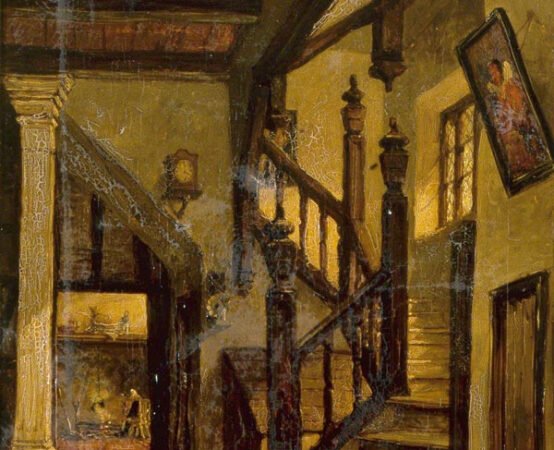
Above the dining room lies the so-called “Queen Elizabeth’s Room,” distinguished by its oriel window. The fireplace, with its chamfered four-centred arch, reflects an earlier style, while later Jacobean panelling has been incorporated above. A particularly fine beam is carved with H-leaf and daisy motifs, showcasing the decorative craftsmanship of the period.
The Withdrawing Room, located above the drawing room, retains much of its original panelling and features a fireplace with characteristic Jacobean composite panels divided by fluted detailing.
Above the Old Kitchen is the State Bedroom, an especially notable chamber. Its fireplace is similar in form to that of the drawing room, while the overmantel displays three scalloped arches separated by fluted pilasters. It is inscribed “Anno G/TM 1609,” commemorating Thomas and Mary Godman, and providing a direct link to the family who shaped the house. An original door survives to the east of the room.
The Withdrawing Room, located above the drawing room, retains much of its original panelling and features a fireplace with characteristic Jacobean composite panels divided by fluted detailing.
Above the Old Kitchen is the State Bedroom, an especially notable chamber. Its fireplace is similar in form to that of the drawing room, while the overmantel displays three scalloped arches separated by fluted pilasters. It is inscribed “Anno G/TM 1609,” commemorating Thomas and Mary Godman, and providing a direct link to the family who shaped the house. An original door survives to the east of the room.
A House of Craftsmanship & Continuity
/04
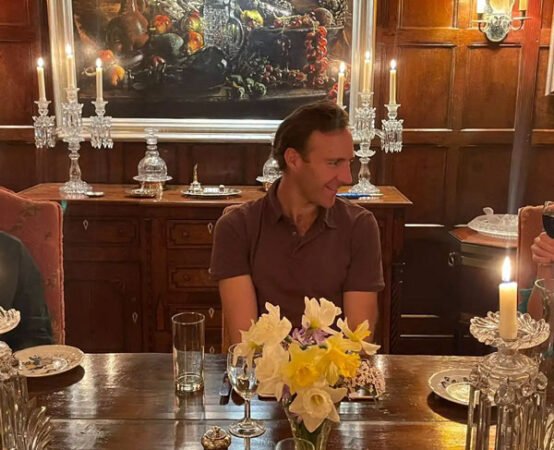
Throughout Great Ote Hall, the survival of original materials—oak beams, elm floors, carved stonework, and panelling—speaks to a building that has evolved over centuries while retaining its essential character. The combination of structural integrity, decorative detail, and historic adaptation makes it a rare and compelling example of a Sussex manor house.